Why breakdown cover is an absolute necessity for every driver
Get covered, drive safely, and enjoy the peace of mind that comes from knowing you are never truly alone on the road.
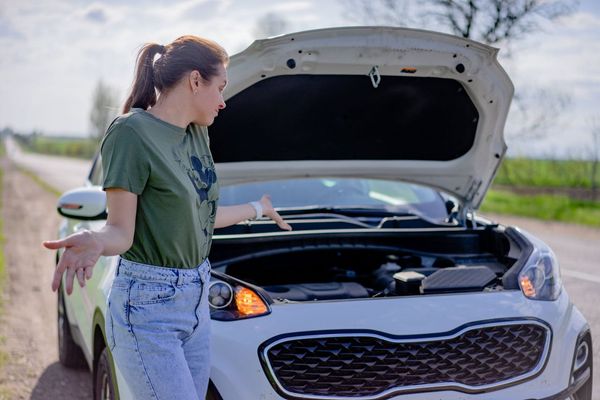
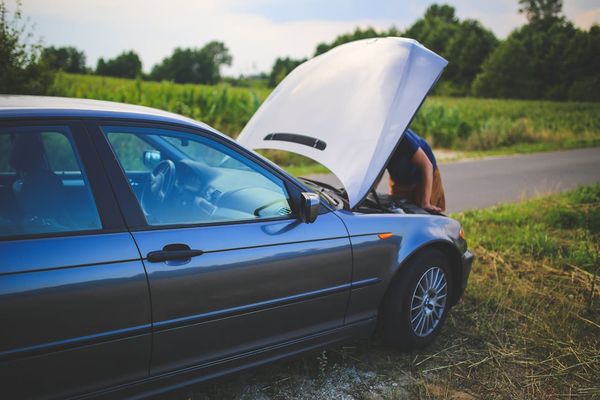
Imagine the scene. It is 8:30 pm on a Tuesday in November. It’s raining, a cold, relentless drizzle that blurs the windscreen faster than your wipers can clear it. You are on the motorway, roughly forty miles from home, with the heating blasting and a podcast playing. Suddenly, there’s a stutter in the engine’s rhythm. A warning light flickers ominously on the dashboard, followed by a loss of power. You manage to coast onto the hard shoulder just as the engine gives a final, defeated shudder and falls silent.
In this moment, there are two distinct realities.
Reality A: you have breakdown cover. You feel a momentary spike of annoyance, pull out your phone, open an app, and tap a button. You know help is coming. You know you won’t be charged a fortune. You know you’ll get home.
Reality B: you do not have breakdown cover. Annoyance is replaced by panic. You are frantically searching Google for local towing companies, wondering if they are open, wondering if they are trustworthy, and dreading the astronomical call-out fee you are about to pay.
Driving is one of the most liberating activities we engage in, but it relies entirely on the cooperation of a complex machine that is subjected to wear, tear, and the elements. While we all pay for car insurance because it is a legal requirement, breakdown cover is often viewed as an optional luxury, something to cut back on when finances are tight.
However, viewing breakdown cover as a luxury is a fundamental error in motoring judgement. Below is a comprehensive look at why breakdown cover is an absolute necessity for every driver, regardless of the age of your car or your driving habits.
1. The financial logic, insurance for your wallet
The most common argument against purchasing breakdown cover is cost.
“Why should I pay £100 a year for something I might not use?”
It is a valid question, but it falls apart when you look at the economics of an emergency. Breakdown cover works on the same principle as any insurance, you pay a small premium to avoid a catastrophic expense.
If you break down without cover, you are at the mercy of the market. An emergency call-out for a tow truck can easily cost between £150 and £300 just to get the vehicle hooked up. Then there is often a mileage charge, for example £3 per mile. If you break down 50 miles from home, you could be looking at a bill of £400 or more before a mechanic has even opened the bonnet.
Compare this to an annual breakdown policy, which can cost as little as £30 to £150 per year depending on the level of cover. One single breakdown in five years justifies the cost of the subscription. When you factor in that many policies include roadside labour, the financial argument becomes indisputable.
It is a small price to pay to protect your savings from a sudden and painful dent.
2. Safety first, the dangers of the roadside
Money is replaceable, your safety is not. This is arguably the most critical reason to invest in breakdown cover.
Breaking down is rarely convenient, but it can often be dangerous. Being stranded on the hard shoulder of a motorway, or worse, in a live lane on a smart motorway, is a high-risk environment. Fast-moving traffic, poor visibility, and adverse weather conditions turn a mechanical failure into a serious safety issue.
Breakdown providers prioritise vulnerable drivers and those in dangerous locations. When you call a major breakdown service, you are accessing a coordinated network that works with highways agencies and the police. Their patrol vehicles are equipped with high-visibility livery and warning lights designed to protect you and your vehicle while repairs are attempted or recovery is arranged.
Attempting to flag down help or waiting hours for a local garage leaves you exposed for far longer than necessary. Breakdown cover buys you the fastest route to safety.
3. Expertise, the difference between a tow and a fix
There is a common misconception that breakdown cover is simply a towing service. In reality, the primary goal of major breakdown providers is roadside repair.
Patrol mechanics from leading providers are highly trained diagnosticians. Their vans are effectively mobile workshops, stocked with batteries, alternators, belts, fuses, and diagnostic computers. Industry statistics show that leading providers fix approximately 80% of vehicles at the roadside.
Without cover, a local towing company will usually do exactly that, tow your vehicle. They will drop it at a garage and leave. You are then without a car while the garage fits you into their schedule, which could take days.
With breakdown cover, there is a high probability you will be driving away within an hour of the patrol arriving. They can jump-start batteries, repair punctures, unlock cars with keys trapped inside, and carry out temporary engine repairs to get you home. You are paying for mechanical expertise, not just a lift.
4. Logistics and onward travel, solving the “what now?” problem
Let’s return to the scenario of breaking down 40 miles, or perhaps 200 miles, from home.
If you rely on a local independent tow truck, they will usually take you to the nearest garage. If that garage is 190 miles from your house, you suddenly have a logistical nightmare. How do you get home? How do you retrieve the car once it’s fixed?
Comprehensive breakdown policies include national recovery and onward travel.
National recovery - if the car can’t be fixed locally, you, your passengers, and your vehicle are transported to any single destination in the UK, usually your home or preferred local garage.
Onward travel - if repairs cannot be completed the same day, many policies provide a hire car, cover overnight accommodation, or pay for public transport to help you continue your journey.
This transforms a holiday-ruining disaster into a manageable inconvenience. Having a provider arrange accommodation or transport while you are stressed cannot be overstated.
5. The home start advantage
We often associate breakdowns with long journeys, but a huge percentage of failures happen at zero miles per hour, on your driveway.
Batteries fail overnight in winter. Tyres deflate while parked. Engines flood on cold mornings. If your policy includes home start, or at-home cover, a mechanic will come to your house to get you moving.
Without this cover, you are stuck. You cannot drive the car to a garage, and paying for a tow truck to move it two miles down the road feels like wasted money. Home start is the ultimate convenience for the daily commuter.
6. The myth of the new car
A common reason people skip breakdown cover is the belief that their car is too new or too reliable to fail.
“It’s a brand-new German SUV, it won’t let me down.”
While modern cars are mechanically reliable, they are electronically complex. A software fault can immobilise a new car just as effectively as a mechanical failure in an older one. Reliability also does not protect against human error or external factors, such as:
Punctures - nails and debris do not discriminate, and many modern cars no longer carry spare tyres
Misfuelling - putting petrol into a diesel car, or vice versa, requires professional draining
Lost or failed keys - modern electronic keys can malfunction or be locked inside the vehicle
Breakdown cover protects the driver against unpredictability, not just engine reliability.
7. Peace of mind, the psychological benefit
Finally, there is the psychological aspect. Driving, especially on long journeys or with family in the car, carries a subtle but constant level of stress.
Breakdown cover removes the “what if” scenarios. It provides confidence, knowing there is a 24/7 call centre, live tracking through an app, and a trained professional on the way.
For parents with young children, this peace of mind is invaluable. Being stranded on a dark road with a distressed child and no plan is a nightmare scenario. Breakdown cover ensures that if the worst happens, the situation is handled quickly and safely.
Choosing the right cover
Not all breakdown cover is created equal. When choosing a policy, check the following:
Vehicle vs personal cover - vehicle cover applies to a specific car, personal cover protects you in any car, even as a passenger
Levels of cover - roadside assistance alone may only tow you a short distance. Look for national recovery
Excess fees - some cheaper policies charge an excess, for example £40, on each call-out
In a world where we insure our phones, our pets, and our holidays, leaving our primary mode of transport unprotected is a gamble that rarely pays off.
The road is unpredictable. Batteries fail, tyres burst, sensors malfunction, and luck runs out. Breakdown cover is not merely protection for your car, it is an investment in your safety, your time, and your financial stability.
Don’t wait until you are standing on the hard shoulder in the pouring rain, watching steam rise from your bonnet, to realise you need it. By then, it’s too late.
Get covered, drive safely, and enjoy the peace of mind that comes from knowing you are never truly alone on the road.